
Ethos.skin

0
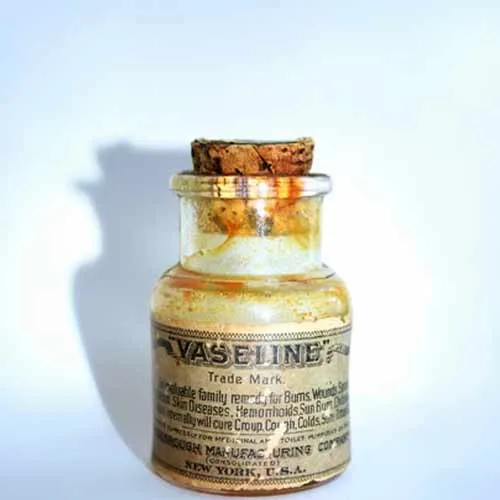
The story of petroleum jelly and paraffin is a compelling narrative of ingenuity and adaptation, deeply rooted in the 19th-century shift from natural resources to petroleum-based alternatives. It begins with Robert Chesebrough, a chemist and entrepreneur, who transformed a collapsing industry into an opportunity that shaped modern cosmetics and industrial practices. While his innovations revolutionized several industries, they also introduced challenges that continue to be scrutinized today.
In the early 19th century, whale oil was an indispensable resource. Extracted from the blubber of whales, it was prized for its bright, clean-burning properties, making it essential for lamps and candles. Beyond lighting, whale oil found its way into soaps, lubricants, and other everyday products. The whaling industry flourished for decades, but this prosperity came at a price. Overhunting led to a sharp decline in whale populations, making the oil increasingly scarce and expensive. At the same time, growing ethical concerns about the environmental impact of whaling began to emerge, forcing society to search for alternatives.
One such searcher was Robert Chesebrough, a chemist who initially built his livelihood on refining whale oil. However, as the industry began to falter due to dwindling supplies and soaring prices, Chesebrough recognized the need to pivot. Around the same time, the first commercial oil well had been drilled by Edwin Drake in Pennsylvania in 1859, sparking interest in the potential uses of crude oil and its byproducts.
Chesebrough’s attention was drawn to a waxy residue, often referred to as “rod wax,” that accumulated on oil drilling equipment. While many in the industry dismissed it as a nuisance, Chesebrough saw an opportunity. Through a process of refinement, he developed a clear, jelly-like substance that would become known as petroleum jelly. Patented in 1870 and marketed as “Vaseline,” the product gained widespread popularity for its healing and protective properties. Chesebrough’s promotional efforts, which included public demonstrations where he would burn his own skin and apply Vaseline to show its efficacy, solidified the product’s reputation. It quickly became a staple in households and medical kits alike.
While Chesebrough was refining petroleum jelly, another petroleum byproduct, paraffin, was gaining attention as a replacement for whale oil in lighting. Derived from crude oil and coal tar, paraffin was a clean-burning, inexpensive substance ideal for making candles. It quickly supplanted whale oil, which had been the dominant fuel for lamps and candles, and became an essential product in both homes and industries. By the end of the 19th century, paraffin and petroleum jelly had rendered the whaling industry obsolete, saving countless whale species from the brink of extinction.
The legacy of these petroleum-based products is not without controversy, particularly in the cosmetics industry. While petroleum jelly and paraffin were celebrated for their versatility and affordability, modern research has highlighted their drawbacks. Petroleum jelly, for instance, forms an occlusive barrier on the skin that locks in moisture but also traps dirt, sebum, and bacteria. This can lead to clogged pores and exacerbate skin conditions like acne. Additionally, petroleum jelly lacks any active nutrients or reparative properties, which makes it less beneficial than plant-based alternatives such as shea butter or jojoba oil.
Paraffin, once lauded for its clean-burning properties, has also come under scrutiny. Burning paraffin candles releases toxins and soot, contributing to indoor air pollution. Moreover, both paraffin and petroleum jelly are derived from non-renewable fossil fuels, raising concerns about their environmental impact. Their production involves significant carbon emissions, and neither substance is biodegradable, contributing to the global challenge of plastic and petrochemical waste.
In response to these concerns, the cosmetics industry has increasingly shifted toward natural and sustainable alternatives. Plant-based oils and waxes, such as beeswax, coconut oil, and almond oil, provide similar benefits without the environmental and health drawbacks. These natural ingredients are often more compatible with the skin, offering nourishing properties that petroleum-derived products lack.
It is impossible to overstate the historical importance of Chesebrough’s innovations. The discovery of petroleum jelly and the rise of paraffin represented a turning point in industrial history, providing solutions to the scarcity and environmental devastation caused by the reliance on whale oil. Their development not only revolutionized lighting and skincare but also demonstrated the potential of petroleum byproducts, paving the way for the modern petroleum industry.
The legacy of petroleum jelly and paraffin is a complex one. While they solved critical challenges of the 19th century, they also introduced new environmental and health concerns that continue to shape their use and perception. Chesebrough’s ingenuity remains an enduring testament to the power of innovation, but his inventions also serve as a reminder of the need for sustainable and responsible practices in industry and cosmetics.